

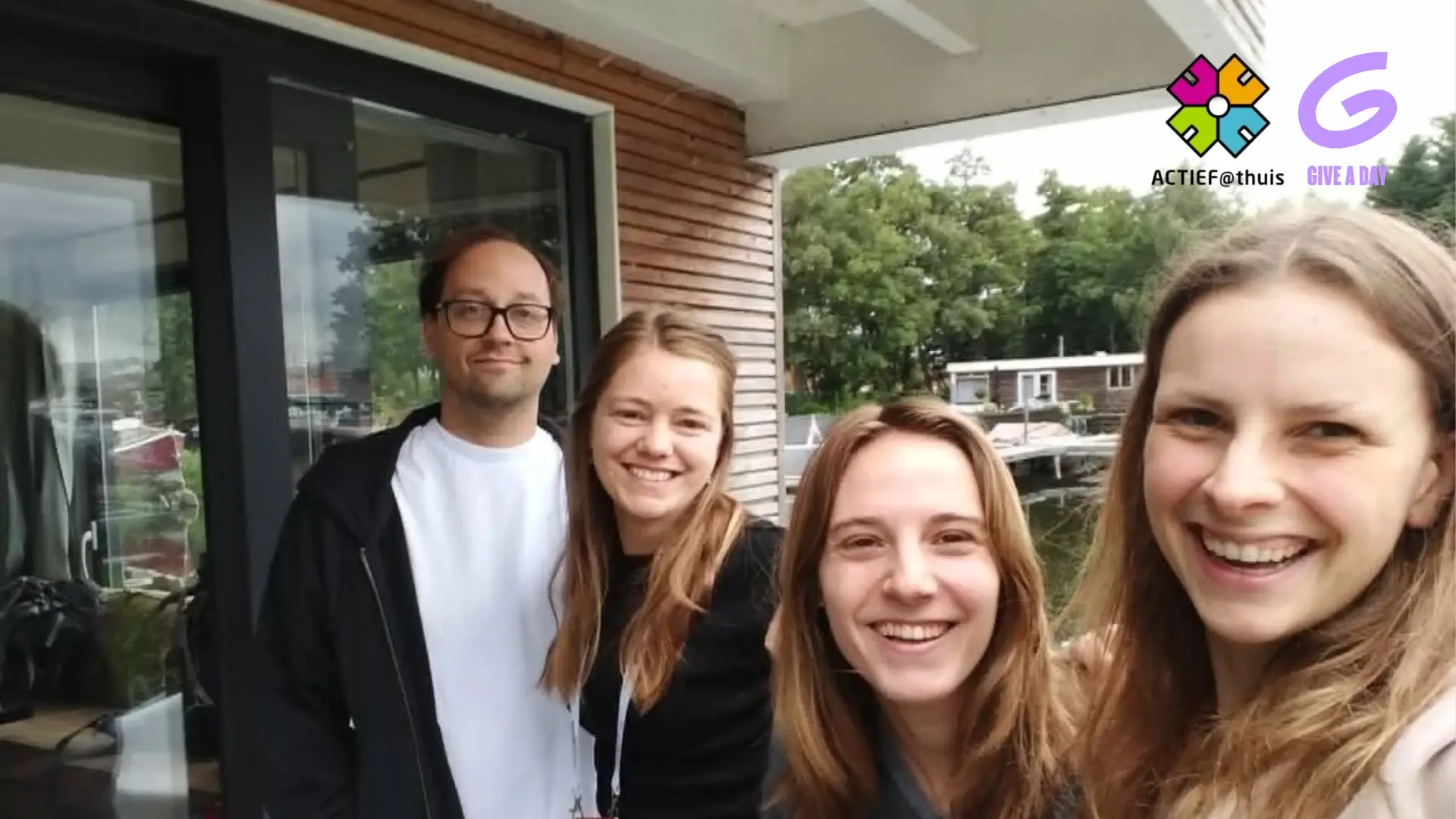
From interest to commitment: five types of volunteers and what they need

Guest contribution by Arwen Vangilbergen, former volunteer coordinator of ACTIEF@thuis
Finding a volunteer is one thing. Discovering what someone needs to get started with enthusiasm, confidence and sufficient support is another.
Arwen Vangilbergen coordinated the volunteers of ACTIEF@thuis for two years, a scientific research project on exercise for vulnerable older adults. She responded to our call to share practical insights and wrote two articles for our blog. In this first part, she describes five types of volunteers she encountered over two years and what each of them needs. Do you also have lessons from the field? Share them with us.
The five profiles in brief
The retired volunteer who wants to stay active
The extrinsically motivated volunteer
The volunteer seeking purpose during a difficult period
The busy volunteer who does volunteering as a hobby
The volunteer who wants to help a friend or family member
Two years of volunteer coordination at ACTIEF@thuis
As a researcher in the field of health promotion, I started a new challenge two years ago at ACTIEF@thuis. ACTIEF@thuis is a 24-week exercise program specifically developed to keep vulnerable over-70s living at home active. As part of a scientific research project, we investigated whether volunteers could be deployed as exercise buddies to bring the exercise program right into the living rooms of vulnerable elderly people.
After the unexpected departure of the volunteer coordinator, I took over his tasks without experience, but with plenty of enthusiasm, eagerness and a willingness to learn. I looked for candidate exercise buddies, trained them, found a good match with an elderly person, guided the initial contact and followed up on their progress over 24 weeks.
In those two years, I met many different volunteers. Although I had been told that ACTIEF@thuis volunteers were mainly active retirees, it soon became clear that the audience was much more diverse. Our youngest volunteer was 20, the oldest 80. Some were retired, others were not active in the labor market, and still others were working or studying. Each of them had their own reason for volunteering at ACTIEF@thuis.
Although every volunteer is unique, I did see certain patterns recur in practice. I am therefore happy to share five profiles that I recognized in our volunteer group. Not as rigid boxes, but as different ways people can get involved, each with their own motivation, strengths, needs and challenges.
1. The retired volunteer who wants to stay active
For many retirees, volunteering at ACTIEF@thuis was a way to remain physically and socially active themselves. For instance, there was M. who, through ACTIEF@thuis, not only wanted to stay active herself, but also wanted to get to know her new neighborhood better. M. became the exercise buddy of B., with whom she built a strong, reciprocal bond. During the exercise sessions, she offered not only structure and support, but also a pleasant atmosphere and warmth.
M.: “Actually, the exercises were good for me too. I joined in, and that way I got my exercise too. I always enjoyed going to B. I could have a chat with him. We could laugh together. That was fun!”
I noticed that retired exercise buddies often built a strong bond with their participant. After the exercise sessions, they stayed a bit longer for a chat, and in many cases they stayed in touch even after the exercise program ended. In addition, they were usually very proud of their volunteer work and willing to take on extra tasks alongside the exercise sessions. A few of them even became enthusiastic ambassadors for ACTIEF@thuis.
At the same time, specific concerns also emerged. For instance, I noticed that they were more often insecure about their own physical capabilities: “Am I fit enough?” and about the responsibility of guiding the exercises safely: “What if something happens?”. They also indicated more often that they struggled to combine all the different components of the program: physical exercises, cognitive exercises, motivational interviewing, setting goals, filling out questionnaires, monitoring intensity and safety, … Sometimes it was all a bit much. Finally, they felt it was important that their volunteering did not stand in the way of the freedom and flexibility of their retirement.
For these retired exercise buddies, warm and personal guidance was important. They needed practical explanations, reassurance, clear agreements and support in guarding their own boundaries and time investment. In addition, they especially needed warm, friendly and personal contact with the volunteer coordinator.
2. The extrinsically motivated volunteer
The extrinsically motivated volunteer does volunteer work mainly as a stepping stone to something else. For instance, we had volunteers who wanted to gain experience in the social sector to increase their chances on the job market. We also had physical education students doing their internship with us. And we had non-native newcomers who wanted to practice their Dutch, expand their network and get to know the Belgian healthcare system better.
T.: “I don't speak Dutch well, so it's often difficult for me to communicate, to explain something and build a bond of trust. At ACTIEF@thuis I was able to practice that and that helped me.”
On the one hand, these exercise buddies sometimes seemed a bit less committed. They appeared to build a less strong bond with their participant, invest less time and creativity in preparing their exercise sessions, and be less inclined to take on extra activities outside of guiding exercise sessions with their participant.
On the other hand, these exercise buddies usually stayed very true to their commitment. They kept putting in effort as long as their participant wanted to as well, even if things didn't go quite as hoped. For example, there was one exercise buddy whose motivation gradually declined for various reasons: the travel distance to the participant was farther than hoped, the exercise sessions went less smoothly than hoped, many exercises had to be adapted to the participant's physical limitations, the exercise booklet turned out not to be quite her thing, … Yet she persevered. For six months, she visited her participant every week to do physical exercises together. She wanted to be there for her participant and she wanted to prove to herself that she deserved a good job in healthcare. She certainly proved that she is a go-getter!
For these volunteers, it was important to achieve a concrete and tangible result from their volunteering. An attestation, certificate or letter of recommendation helped to make the gained experience visible to, for instance, a future employer. Volunteers who wanted to practice their Dutch needed a volunteer coordinator who could explain things in different ways and who could listen patiently while they searched for the right words.
3. The volunteer seeking purpose during a difficult period
Volunteers seeking purpose during a difficult period often dealt with physical or mental challenges that prevented them from entering the regular labor market. Out of necessity, they spent a lot of time at home and were looking for meaning, social contact and structure. As an exercise buddy at ACTIEF@thuis, they felt meaningful again.
A volunteer: “Now that I'm at home anyway, it gives structure to my day, a task, a point of contact, a meaningful activity. As long as I have the space for it myself, I'd like to keep doing it.”
These exercise buddies were often very involved. They prepared well for exercise sessions, built a strong bond with their participant, were very creative in adapting exercise sessions to the participant's needs and interests, and liked to stay in touch with their participant after the end of the exercise program. For example, one of them turned the exercise routines into fun dances to her participant's favorite music. Her participant cheered up completely!
At the same time, I also saw a lot of insecurities among these exercise buddies: “Am I doing it right? Shouldn't I be doing better?” That uncertainty was sometimes accompanied by guilt, for example when a session didn't go quite as planned or when less progress was made than hoped. Furthermore, despite their great commitment and involvement, these exercise buddies unfortunately often had to drop out to focus on their health.
In such situations, a volunteer coordinator plays not only an organizational role, but also a human one: listening, reassuring, brainstorming, being flexible and guarding boundaries at the same time.
4. The busy volunteer who does volunteering as a hobby
The fourth profile consisted of busy people for whom volunteering was a meaningful hobby. Most of them worked or studied. These volunteers were looking for a meaningful leisure activity they could combine with their other daily activities.
Their time was scarce, but that didn't mean they were less involved. D. is a great example of this. She combined her volunteering with a job and a degree program. With some juggling, flexibility, good communication, understanding and perseverance, she was eventually able to complete the program successfully with no fewer than three different participants.
For these volunteers, a good match with the participant was very important. They are not willing to invest their scarce free time in a commitment that doesn't feel right. At the same time, a strong bond with the participant could become an important motivator to keep up the commitment.
K.: “She's become a bit like a grandmother to me. We have very open conversations, lovely conversations, she completely understands my situation and my story. […] We both get a lot out of each other!”
These exercise buddies were often very independent and responsible. Once they made a commitment, they were reliable, few exercise sessions were canceled at the last minute, and when problems arose they often looked for a solution themselves.
On the other hand, they had little need for extensive guidance. They mainly wanted freedom, trust and room for initiative. The volunteer coordinator needed to be available when necessary, but did not have to intervene constantly. For this group, brief, concrete agreements at the right moment can be much more valuable than frequent guidance.
5. The volunteer who wants to help a friend or family member
Finally, there were volunteers who committed to helping a friend or family member. For example, they were exercise buddies for their own parent or temporarily stepped in when a volunteer friend was unavailable.
In practice, this type of volunteer proved very valuable for guaranteeing continuity for the participant when no external exercise buddy was available.
On the other hand, it is important to ensure that exercise programs for vulnerable elderly people, such as ACTIEF@thuis, do not create an extra burden for informal caregivers. Informal caregivers already carry more than enough tasks and responsibilities and should not have even more placed on their plate.
In addition, a personal connection between participant and exercise buddy did not seem ideal in the long run. In our experience, the personal bond seemed to result in the exercise program being taken less seriously, exercises being rushed in between daily chores, and practical follow-up, such as filling out logbooks, receiving less attention. Furthermore, a close, personal bond between participant and exercise buddy can also lead to the participant placing less importance on the exercise buddy's advice and instructions.
N.: “Whether I have a degree in physiotherapy or not, she (my mother) doesn't listen to me anyway!”
When no external exercise buddy is temporarily available, an informal caregiver, friend or family member of the vulnerable elderly person can step in as an exercise buddy. Intensive guidance is important in this regard to guarantee the quality, intensity and practical follow-up of the exercise sessions.
What can we learn from this?
These five volunteer profiles are an example of how diverse volunteers can be. Although they were all interested in the same volunteer vacancy, “Exercise buddy for a vulnerable elderly person at ACTIEF@thuis”, they still had different needs to move from interest to commitment.
After two years of volunteer coordination, I now look differently at the question: “How do we find more volunteers?” Maybe we should ask that question less often. An at least equally important question is: “How do we ensure that people interested in volunteering can actually get involved?” How do we move from interest to commitment?
That starts with listening. Listening to why someone wants to volunteer. To what someone expects. To what someone finds difficult. To what someone needs to feel confident. And to what the commitment means within the rest of someone's life.
Because the volunteer who wants to stay active after retirement has different needs than the student who wants to gain experience. The volunteer going through a difficult period needs different support than someone with an overloaded schedule. And someone who commits to helping a family member requires yet another approach.
Good volunteer coordination therefore does not mean doing the same thing for everyone. It means paying attention to the person behind the volunteer. Because between interest and commitment lies a whole world. And that is precisely where I believe an important role lies for the volunteer coordinator.
Share your lessons from the field
In the second part, Arwen explains how to organize the work around your volunteers, with six lessons from ACTIEF@thuis. That article will also appear here soon.
Are you a coordinator yourself and do you recognize these profiles? Curious how volunteers describe their own motivation? Read Marc's story, volunteer at five organizations, or Glenn's story.
Do you also have lessons that help other organizations? Share your knowledge, we will share them with the world.
See you soon!
Frequently asked questions
What types of volunteers are there?
At ACTIEF@thuis, Arwen recognized five profiles: the retiree who wants to stay active, the extrinsically motivated volunteer, those seeking purpose during a difficult period, the busy volunteer with volunteering as a hobby, and those wanting to help a friend or family member. They are not fixed categories, but different ways to get involved.
How do you guide a retired volunteer?
With warm, personal guidance: practical explanations, reassurance, clear agreements and help in guarding boundaries and time investment.
What does a volunteer who wants to gain experience for a job need?
A concrete and tangible result. An attestation, certificate or letter of recommendation makes the experience visible to a future employer.
How do you find more volunteers?
According to Arwen, an at least equally important question is how interested people can actually get involved. That starts with listening to what someone expects, finds difficult and needs.
About the author
Arwen Vangilbergen was a researcher at Artevelde University of Applied Sciences until September 2026. Her duties mainly consisted of volunteer coordination for ACTIEF@thuis, a 24-week exercise program for vulnerable over-70s living at home. The research project ended on October 1, 2026: no new volunteers or participants can join anymore.
More about ACTIEF@thuis · Arwen on LinkedIn
About the project ACTIEF@thuis
Institutions: Artevelde University of Applied Sciences, VUB, UGent, UAntwerpen, Odisee University of Applied Sciences and UZ Brussel
Team: Emma De Keyser, Jade Tambeur, Elke De Smedt and Timothy Moreels
Supervisors: David Backwée, Dominique Van de Velde, Wim Peersman, Nick Verhaeghe and Siddhartha Lieten
Lead supervisor: Patricia De Vriendt
With support from: FWO
Sources
Practical experience of the author as volunteer coordinator at ACTIEF@thuis. Project page: activeage@home exercise program for vulnerable elderly people, Artevelde University of Applied Sciences.
Related news and stories
Volunteer at five organisations: Marc's story
Marc volunteers for five different organisations in Aalst, yet he only has one fixed weekly appointment in his diary. How does he balance multiple commitments without feeling overwhelmed? Discover five practical lessons from Marc on setting boundaries, managing your schedule, and finding joy in volunteering.
Volunteering with a disability: Glenn's story
After his accident, Glenn faced dozens of closed doors. That changed when a volunteer organisation asked him: "What do you still want to do?" Read Glenn’s powerful story of volunteering with a brain injury, and get five practical tips on how your organisation can truly empower volunteers with disabilities.
Work Session Everyone Volunteer: get ready for phase 2 of the campaign
As the International Year of the Volunteer approaches, the Everyone Volunteer campaign is entering its second phase. Join one of our free online work sessions designed for local governments and organizations. Get ready for the national launch with practical tools, ready-to-use communication kits, and the exciting Volunteer Challenge.