

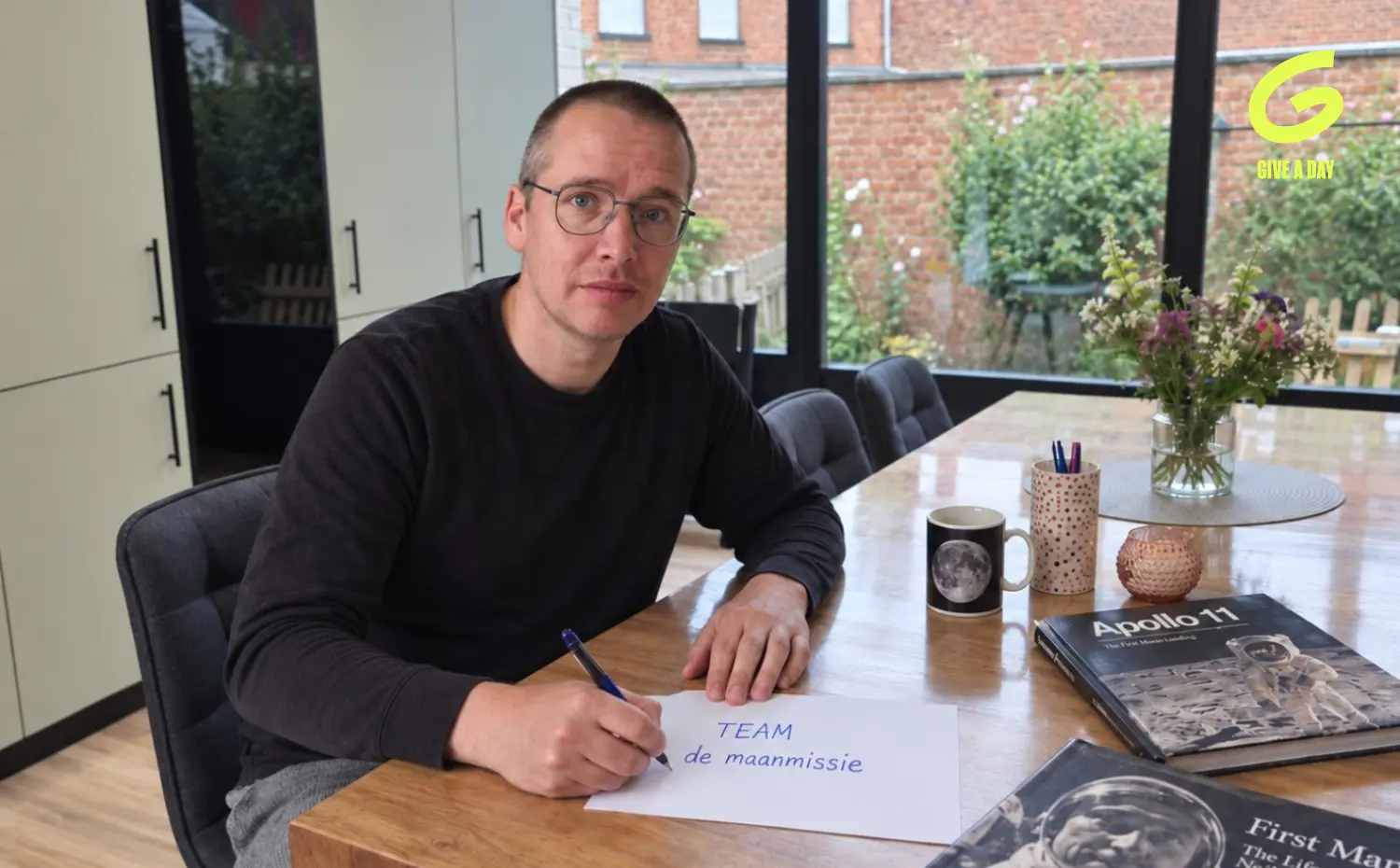
Volunteering with a disability: Glenn's story
After his accident, Glenn faced dozens of closed doors. That changed when a volunteer organisation asked him: "What do you still want to do?" Read Glenn’s powerful story of volunteering with a brain injury, and get five practical tips on how your organisation can truly empower volunteers with disabilities.
After his accident, Glenn sent 82 job applications. Not a single one led to a real opportunity.
"Very often I felt that people were already judging me before they knew me. They saw the wheelchair."
About a year after his accident, he ended up at the Hersenletsel Liga. There, for the first time, he was asked a different question than he was used to. Not: what can you no longer do? But: what do you still want to do?
This is the story of what that single question set in motion, with five tips from Glenn for anyone working with volunteers or experts by experience.
Glenn in short
Nurse, expert by experience and musician
Volunteer at the Hersenletsel Liga: columns, ABI ambassador, Awareness & Communication working group and the podcast
Maker of De MensenZijde (album Bitterzoet) and writer of the youth books De maanmissie and De smaak van verraad
What do you still want to do?
The initiative came from Glenn himself. He approached the Liga with ideas for other people with a brain injury. No fixed role, but questions: what would you like to do, where do your interests lie? That is how his roles emerged naturally.
"What I personally like about that is that they didn't first look at my limitations. They looked at what I still could do."
Dat was nieuw. Sinds zijn ongeval had Glenn vooral deuren zien dichtgaan.
"And sometimes such a simple question is exactly what someone needs to start seeing possibilities again."
Remember that sentence when you guide volunteers. An intake that starts with what someone wants leads to a different conversation than an intake that starts with a set of tasks.
Why flexibility is not a luxury
There is no fixed schedule. Usually, an email arrives: can you write a column, do you want to brainstorm about something? Sometimes he says yes, sometimes no. What does the Liga do to keep that workable? No system or tool, Glenn says. Understanding and freedom.
"If I indicate that I am busy with other projects, that is simply accepted. There is no pressure afterwards and I don't have to explain myself extensively."
"They understand that my life does not only consist of the Hersenletsel Liga. That might sound obvious, but it makes a huge difference."
And then the sentence that every volunteer coordinator should hang above their desk:
"Volunteering should be something that also gives you energy, not something that makes you feel once again like you have to perform or that you are letting someone down when things don't work out for a moment."
That is exactly why he stays. There was never a moment when he wanted to stop.
What a brain injury changes for an entire family
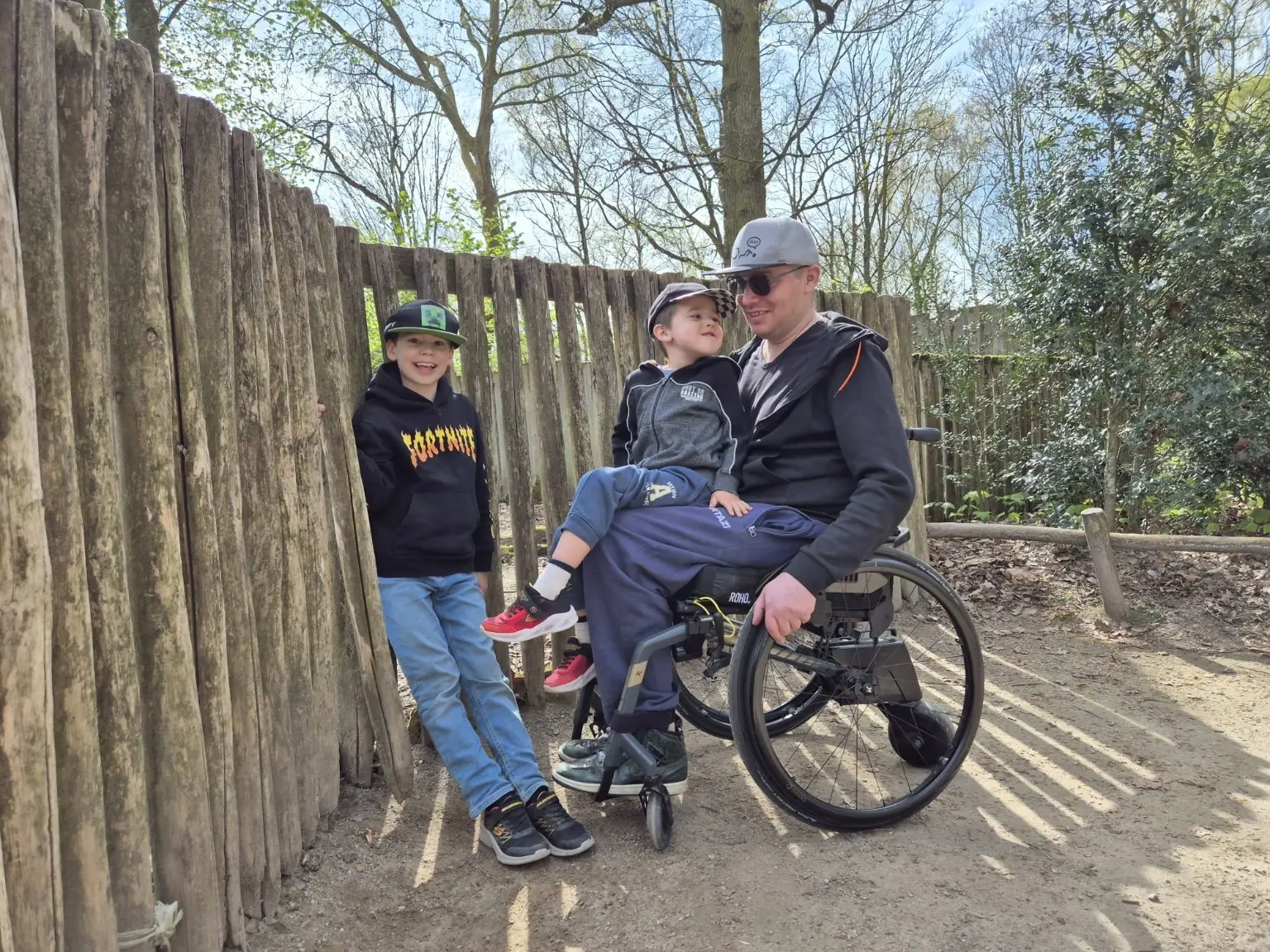
A brain injury changes your entire daily life, Glenn says, and therefore also that of the people around you. Going out to a restaurant? First finding out if you can get in with a wheelchair. Going on a trip? Then the planning starts much earlier. What he finds hardest about that is not about himself.
"As a partner and a parent, you don't always want to be the one around whom everything has to be adjusted. You don't want your children to have to think first: can Dad actually come along?"
His message to partners: don't forget yourself, because the consequences are often borne by an entire family. To children: your mom or dad is still the same person who loves you.
"A brain injury takes away many things we take for granted. But it doesn't have to take away who you are to each other."
First the disability, then the person
After a column about work, Glenn received reactions from people with a disability. Almost all of them told the same story: people see the disability first, then the person. They speak to you more slowly, or they address the person standing next to you.
"As if a physical disability says something about your intelligence. That can be incredibly humiliating."
What touched him most: his experience was not an isolated story.
"When someone then writes to you: 'This is exactly what I feel too, but I could never explain it,' then you know why you write. For me, that is impact."
The person behind the label
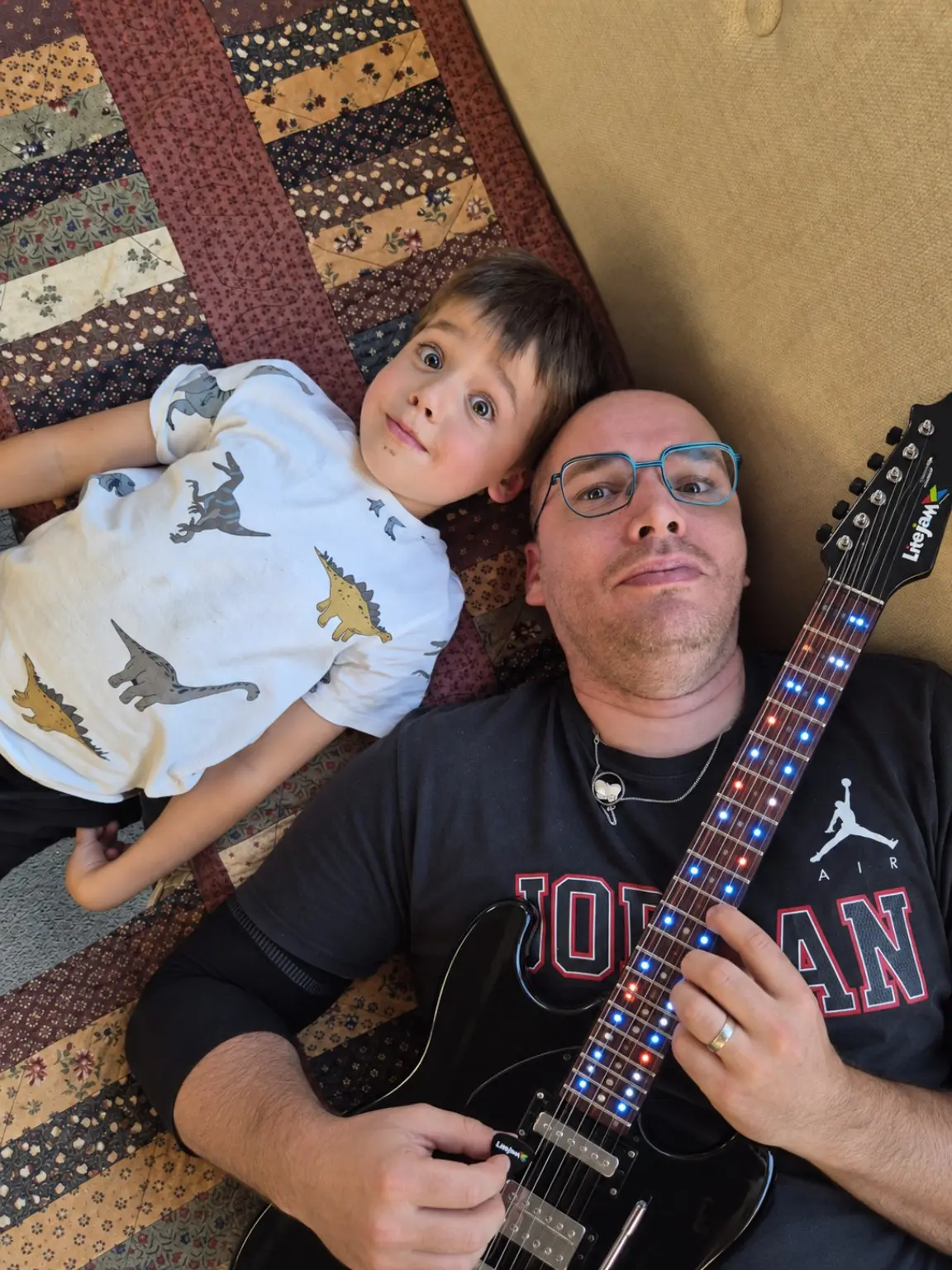
After the accident, Glenn mostly had to lie down a lot. But he could write. So he wrote: two youth books, De maanmissie and De smaak van verraad, which will be published soon. And after that, music.
That is how De MensenZijde was born: songs about loss, dementia, poverty, mental health issues, disabilities, care, and parenting. Always about the person behind a label.
"After my accident, I noticed how quickly a person can be reduced to a single word: patient, wheelchair user, disabled. With De MensenZijde, I try to do exactly the opposite."
Yet the album Bitterzoet does not sound pathetic. It's a rock record.
Listen to De MensenZijde on Spotify.
Five pieces of advice for organizations
Glenn looks at brain injury from two sides: as a nurse and as someone who experienced it himself.
"Before my accident, I thought I was a good nurse. Medically, I was strong, and I was convinced that I also worked in a human, understanding, and involved way. Now I realize that, to some extent, I mostly just thought I did."
In the past, he was quicker to think: why isn't this patient cooperating? Today he asks a different question. Why is someone acting this way?
"Behavior almost never comes out of nowhere. Behind anger, resistance, or frustration, there is often a story that we, as healthcare providers, do not immediately see."
This leads to five pieces of advice.
1. Involve people at the beginning, not at the end
A hospital set up a new restaurant. Wheelchair-friendly on paper. In practice, someone in a wheelchair could hardly get anything independently.
"You can technically stay perfectly within the rules and still build something that doesn't work in practice." According to Glenn, guidelines are a starting point, not an end point.
2. Ask what someone needs
"Organizations should ask much more often: 'What do you need to be able to do this?' instead of immediately deciding: 'Apparently, this is no longer possible.'"
Maybe a full workday isn't possible, but four hours is. Maybe a busy meeting isn't possible, but brainstorming is if the information comes beforehand.
3. Be less quick to jump to conclusions
A brain injury is often hard to see and highly variable. Someone who comes across as clear and strong now can be completely exhausted a few hours later. This is sometimes interpreted as unwillingness, whereas it could simply be the injury.
4. Don't start with a plan, but with listening
First, talk to those who live with a disability themselves. Choose one concrete situation, have someone with lived experience take a look, and really test it.
"Not just: 'Does this comply with the rules?' But: 'Does this work for the person we are making it for?'"
5. Don't make it a token presence
"Don't invite someone just so you can say afterwards that you involved an expert by experience. Give that person real influence too."
"In my opinion, inclusion doesn't start with a policy document. It starts when someone is sitting at the table before decisions are made."
Don't look at someone on their worst day
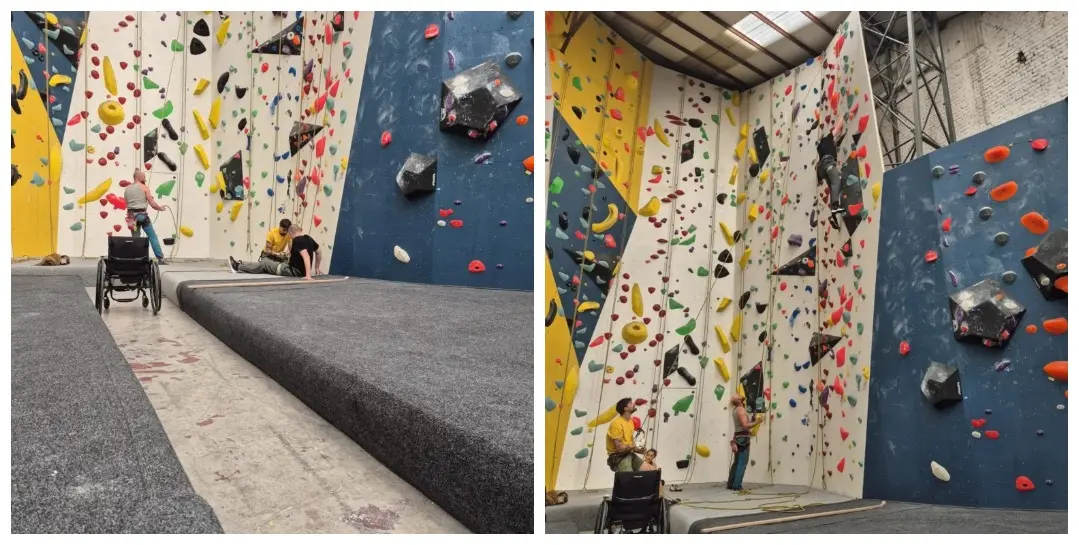
Glenn's hobby is wall climbing. To some people, that sounds strange, especially when they see his wheelchair first.
"Above all, don't just look at someone on their worst day. If, after my accident, I had only been judged on the moments when I could do the least, no one would have ever thought that I would work as a nurse again, develop programs, or build all those other projects."
Meanwhile, a care program he devised himself is running in an entire residential care center.
"This program is more than software. It is also my answer to all those closed doors. Not out of revenge. But because I wanted to prove to myself that what others might no longer see, was still there."
Possibilities change, ambition doesn't
What does Glenn say to someone who doubts whether they still have something to offer? Don't doubt.
"Someone with a disability doesn't just want a job for the sake of having a job. We also want a challenge. We want responsibility. We want to grow. We have ambition too."
"My disability has changed my possibilities. But not my ambition."
And to organizations? Just ask that one question that set everything in motion for Glenn. What do you still want to do?
Thank you, Glenn
Thank you for the conversation, the photos, and especially your honesty. Good luck with De MensenZijde.
Also thanks to the Hersenletsel Liga, which shows what it yields when you start with what someone is actually capable of.
Sources
● Interview with Glenn, volunteer at the Hersenletsel Liga.
● Why I am a volunteer at the Hersenletsel Liga, Hersenletsel Liga, June 2026: https://www.hersenletselliga.be/testimonial/waarom-ik-vrijwilliger-ben-bij-de-hersenletsel-liga/
● De MensenZijde on Spotify: https://open.spotify.com/artist/1cbPq8RBa2gKr1fCj22tQc
● Photos: Glenn, with permission.
Related news and stories
Work Session Everyone Volunteer: get ready for phase 2 of the campaign
As the International Year of the Volunteer approaches, the Everyone Volunteer campaign is entering its second phase. Join one of our free online work sessions designed for local governments and organizations. Get ready for the national launch with practical tools, ready-to-use communication kits, and the exciting Volunteer Challenge.
Wanting vs doing: share your knowledge, we'll share it globally
Volunteer expense allowance 2026: amounts, rules and obligations
Are you up to date with the volunteer expense rules for 2026? From daily and annual caps to mileage allowances and administrative duties, managing reimbursements can be complex for organisations and local governments. Discover the three legal systems, key policy requirements, and how to avoid costly compliance mistakes.